Backstage & Influences
Heart failure is the leading cause of early death in type 2 diabetes patients — and mitochondrial dysfunction in heart muscle is a big part of why. If pure strength or sprint performance is the goal (that’s a real consideration), not just a theoretical one from a rodent AMPK study. There’s also a real piece of actual human evidence here that most guides skip.
No (not when injected KLOW peptide research blend details subcutaneously), which is how people take it. MOTS-c is sold as a research compound in the US and is not FDA-approved for therapeutic use. Both activate AMPK, but they act on different primary tissues , metformin on the liver, MOTS-c on skeletal muscle,. Everest’s larger vial is 40mg, not the 50mg some vendors list. Quality matters more for MOTS-c than most peptides because of the stability issue.
What the animal doses scale to — versus what people actually inject. The 5–10 mg figure people actually use sits well below both. People who inherit a weaker version of MOTS-c have measurably worse metabolic outcomes, which is real evidence that MOTS-c does something meaningful in human physiology.
Related articles
Any clinician with athlete patients should verify current World Anti-Doping Agency (WADA) status before discussing it (because the consequences of a positive test fall on the patient), not the practice. The difference between those two patients is the difference between informed participation in something investigational and an inappropriate clinical promise. The recommendation went against the FDA staff briefing, which had proposed adding none of them. The evidence base is largely preclinical , cell and animal,, with very limited human data. But in the real world, the most immediate concern is often not the molecule — it is the supply chain.
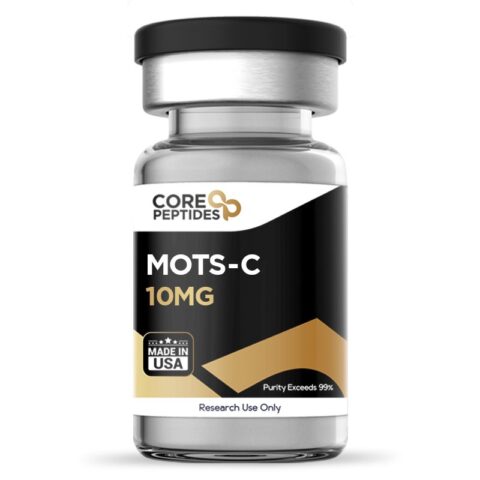
The Function of Mitochondria and MOTS-c
This guide provides an overview of MOTS-c for those who are just beginning their exploration, detailing its function, the reasons it has garnered attention in metabolic health and energy, common dosing methods, and possible drawbacks. The peptide known as MOTS-c (also referred to as MOTS c peptide), consists of a sequence of 16 amino acids and is encoded in mitochondrial DNA, often marketed online as ‘exercise in a vial. Research in mice demonstrated that it reduced obesity caused by diet (diminished insulin resistance), and enhanced running ability. The applications of the mitochondrial-derived peptide in metabolic health have established it as a prominent contender for research on metabolic disorders. Lower levels of MOTS-c correlate with poorer metabolic health, showing an inverse relationship with BMI, fasting insulin levels, and standard insulin resistance metrics, and are found at lower levels in individuals with type 2 diabetes. Due to the rapid degradation of MOTS-c, obtaining a flat result is frequently more indicative of a quality issue rather than a genuine non-response. Most guides on MOTS-c overlook this aspect, which is more significant than many individuals realize.
Key facts
Sometimes injuries, illness or lifestyle changes may force people to discontinue their customary training programs. Once reconstituted, it typically remains stable for up to 30 days, but it’s best to follow storage guidelines on the product label. Although MOTS-C shows promising benefits, its long-term safety is still being studied. MOTS-C is still relatively new (and while preliminary findings are promising), its safety in human applications remains under-researched. Additionally, it has shown potential in enhancing cardiovascular health by supporting blood vessel function in animal studies.

MOTS-c for weight loss and insulin resistance: what the research shows
Signing up for an account (it’s required now) takes a further 25% off your first order, whatever the price is that week. The 10mg vial is $49.99 regular, with the COA posted on the product page. Every lot goes to Freedom Diagnostics for independent testing, which for a compound this fragile is how you know what arrived in the vial. MOTS-c does several things because it’s tapping into a fundamental metabolic pathway. A single injection 10 minutes before exercise increased running time by 12% and distance by 15%. Do not leave it at room temperature or reconstitute multiple vials in advance.
The people who like it are tracking objective markers — waist measurements (fasting glucose), workout logs — and watching the trend lines move over weeks. The people who are disappointed by MOTS-c are usually expecting it to feel dramatic. If you have a 10 mg or 40 mg vial in front of you, the step-by-step mixing and unit math is in how to reconstitute MOTS-c. Nobody has compared the two in people, so the lower weekly total is the cautious choice rather than a proven better one. For people who feel generally « inflamed » without a clear acute cause, this can be a meaningful benefit. That decline tracks with reduced metabolic flexibility, increased systemic inflammation, lower exercise capacity, and the general feeling that your body handles stress less efficiently than it used to.
When evaluating a source, researchers should utilize a standardized assessment framework instead of solely depending on the price or the appearance of the vial. Detailed information regarding the company’s testing methods, which include practices for third-party verification, is preserved within the quality-testing documentation of Royal Peptide Labs. This distinction is crucial because HPLC alone cannot conclusively eliminate the possibility of detecting another peptide or a sequence variant that coincidentally co-elutes at a similar retention time. 5-Amino-1MQ is a small-molecule compound under investigation for its role as an inhibitor of NNMT (nicotinamide N-methyltransferase), an enzyme that plays a part in cellular methylation and NAD+ metabolism. Researchers frequently pose two of the most common comparative inquiries regarding MOTS-c that concern its connections to NAD+-pathway studies and the compound 5-Amino-1MQ. This section aims to elucidate the practical rationale behind that classification for researchers while clearly outlining the mechanistic differences involved.
Next Post : Top Online Casinos for Real Money Gaming stellare login in 2026
-
Document sans nom -
Search